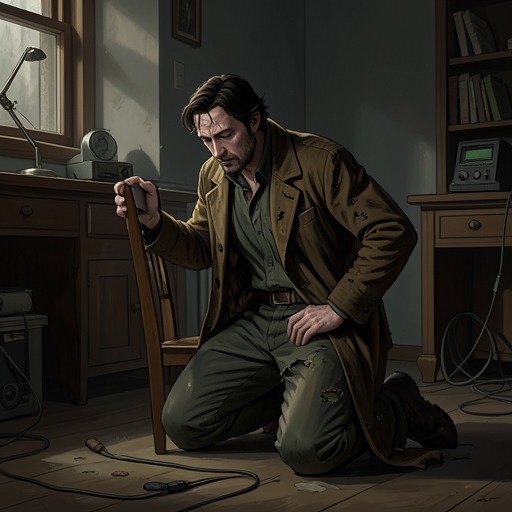
Ivan Karamazov's courtroom accusation of Smerdyakov
The Brothers KaramazovAt Dmitri Karamazov’s trial, Ivan Karamazov names Smerdyakov as the murderer and produces a bundle of notes. His intervention unsettles the apparent case against his brother, but does not settle who killed their father: Ivan is believed to be suffering from brain fever, Smerdyakov has died by suicide, and the evidence is described as suggestive but inconclusive.
Background and Timing
The courtroom accusation arrives amid a combination of troubling circumstances surrounding the murder case. The trial’s account notes that a suit was available on the very day of the catastrophe, and that the prosecutor had taken care to defend its genuineness. That detail is treated as part of a larger, incomplete pattern, not as a conclusive answer.
Smerdyakov’s sudden suicide on the eve of the trial makes the pattern more disturbing. Because he is dead, the accusation against him cannot be tested by questioning him in court. His death is therefore both a circumstance that directs suspicion toward him and an obstacle to establishing the truth.
The Accusation in Court
Ivan, the prisoner’s elder brother, had previously believed Dmitri guilty. On the day of his testimony, however, he produces a bundle of notes and proclaims Smerdyakov the murderer. The reversal gives public form to a suspicion that had not yet displaced the case against Dmitri: a witness who had believed in his brother’s guilt now identifies another culprit before the court.
The notes accompany Ivan’s accusation, but the courtroom account does not explain their contents or show how they prove the charge. What it establishes is the change in Ivan’s position and the identity he asserts. The distinction matters: his testimony sharply redirects attention, yet the available evidence does not turn his declaration into a demonstrated verdict about the murder.
Credibility and Uncertainty
The narrator acknowledges the court’s and prosecutor’s conviction that Ivan is suffering from brain fever. His statement may, in their view, be a desperate effort conceived in delirium to save Dmitri by transferring guilt to a dead man. This possibility weakens the accusation’s standing without disproving it; the account leaves open whether Ivan’s claim is truthful, delusional, or motivated by the wish to protect his brother.
The uncertainty is sharpened by the repeated return of Smerdyakov’s name. Each recurrence suggests that the case has not been fully explained, but the narrator expressly stops short of resolving it. Ivan’s accusation is thus consequential as a challenge to the court’s understanding, while remaining inconclusive as evidence.
Narrative Significance
The courtroom scene brings together the case’s competing pressures: a charge against Dmitri, a dead man newly named as the murderer, a brother who reverses his former belief, and a witness whose mental condition is in question. The scene does not replace one settled account with another. Instead, the public narration records how apparently persuasive circumstances can point toward a hidden explanation without completing the chain of proof.
Its ending preserves that gap. The narrator suggests that what remains unexplained may someday be clarified, but declines to pursue the matter then. Ivan’s accusation therefore alters the trial’s meaning without providing closure: Smerdyakov becomes central to the mystery, while responsibility and the full significance of Ivan’s testimony remain unresolved.